Is Styrofoam Recyclable? The 2026 Answer Depends on What You Have — and Where You Live
That white, lightweight foam around a new appliance looks disposable — but its recycling story is far more complicated than the bin symbol suggests.

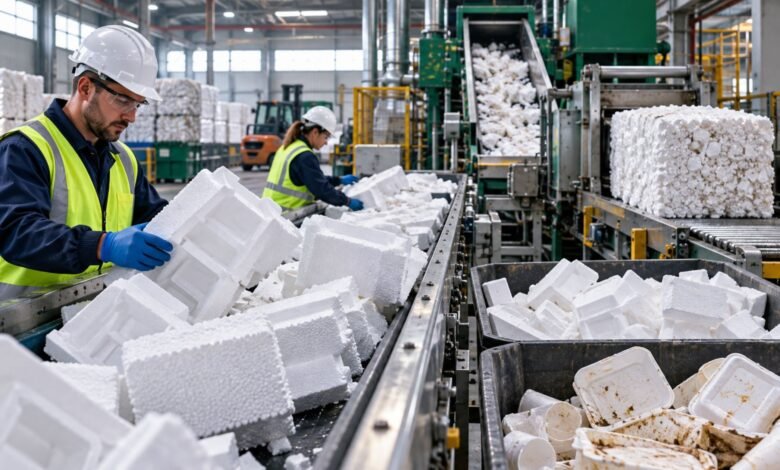
A foam food container, protective packaging block or takeaway cup can look almost weightless in your hand, yet it creates a surprisingly difficult waste-management problem. Millions of people use the word “Styrofoam” for several different polystyrene products, even though they are not necessarily made from the same form of the material or handled by the same recycling system.
The confusion matters because recycling is not determined simply by whether a plastic can technically be processed. The real question is whether a local collection programme, sorting facility or specialist recycler accepts that particular item. The U.S. Environmental Protection Agency says very few localities accept polystyrene foam through curbside recycling, while specialist programmes do exist.
The UK presents another variation. Government guidance in England bans the supply of certain single-use expanded and extruded polystyrene food and drink containers, while 2026 national kerbside guidance does not list expanded polystyrene among packaging commonly or even limitedly collected across UK local authorities.
BLUF: Yes—Styrofoam can be recycled, but only through facilities that accept the specific polystyrene product. Most household curbside programmes do not take foam, while clean expanded polystyrene packaging may qualify for specialist drop-off or mail-back schemes. Local rules decide whether your foam actually enters a recycling stream.
The First Trap: “Styrofoam” Is Not One Recycling Category
The term Styrofoam is commonly used by consumers to describe white foam packaging, disposable cups and takeaway containers. Technically, however, STYROFOAM™ is a Dow brand associated with extruded polystyrene (XPS) insulation, while much of the white protective packaging people throw away is expanded polystyrene (EPS).
That distinction is more than branding.
EPS and XPS are different forms of foamed polystyrene made through different manufacturing processes. U.S. and UK regulatory guidance explicitly distinguishes expanded polystyrene from extruded polystyrene.
For consumers, the practical categories are easier to think about this way:
- White protective packaging around televisions, appliances and furniture: often EPS.
- Foam blocks and moulded inserts: commonly EPS.
- Disposable foam cups and takeaway containers: commonly foamed polystyrene, including EPS-type foodservice products.
- Rigid foam insulation boards: may be XPS or another insulation foam and should not automatically be treated like household packaging.
- Rigid polystyrene products: such as some yoghurt pots and other packaging can follow a different collection route from foam.
This is why the question “Is Styrofoam recyclable?” does not have one universal bin answer.
The underlying polymer may be recyclable in a technical sense. What matters at home is whether somebody in the waste chain actually collects, sorts and reprocesses it.
Quick Facts: The Recycling Reality in 2026
- Material: Polystyrene is a plastic polymer made from styrene monomers.
- Common consumer foam: Expanded polystyrene, or EPS, is widely used for protective packaging and some foodservice products.
- U.S. curbside collection: The EPA says very few localities accept polystyrene foam in curbside recycling.
- Specialist recycling: Clean EPS packaging can be accepted through dedicated drop-off programmes and mail-back systems in parts of North America.
- Contamination: EPS recycling programmes generally require clean material without food, dirt, tape or other contaminants.
- UK 2026 kerbside status: Expanded polystyrene is absent from the UK government’s 2026 lists of commonly and limitedly collected packaging.
- England’s single-use rules: Supply of single-use food and drink containers made from expanded and extruded polystyrene is banned in England.
- Recycling output: EPS recyclers can turn recovered material into products including new packaging, furniture, automotive applications and other manufactured goods.
Why Foam That Is Technically Recyclable Often Ends Up as Waste
Polystyrene illustrates a basic rule of recycling: technical recyclability and real-world recyclability are not the same thing.
The EPA’s consumer guidance repeatedly points people back to local collection rules because a material’s resin identity does not guarantee that a community will accept it. The familiar number inside a recycling triangle is not, by itself, a promise that the item belongs in the household recycling bin.
EPS creates an additional logistical problem. It is extremely lightweight and bulky. A recycling operation may have to collect a large physical volume before it has enough material to justify transport and processing. Industry guidance describes baling and densification as practical ways to compress EPS into more transport-efficient blocks.
Contamination makes the equation harder.
A clean appliance-protection insert can be attractive to a specialist recycler. A greasy takeaway container covered with sauce, labels and food residue is a very different feedstock. EPS Industry Alliance mail-back instructions specifically require material to be clean and free from food, tape, plastic film, labels, loose parts and other waste.
That explains why two foam items that look almost identical can have completely different disposal instructions.
A recycler needs the right material, sufficient volume, a viable transport route, appropriate equipment and an end market for the recovered resin. Without those pieces, “recyclable” can become a theoretical description rather than a practical household option.
The U.S. Answer: Specialist Collection Exists, but the Curbside Bin Usually Isn’t It
For American households, the EPA’s position is unusually straightforward: very few localities accept Styrofoam or polystyrene foam in curbside recycling. The agency directs consumers toward local programmes and specialist drop-off options instead.
That means a clean foam packaging block should not automatically be placed in a blue or mixed recycling bin just because it carries a plastic identification mark.
The route that works in many participating areas is:
Use → keep clean → separate from other plastics → locate an EPS recycler → deliver or mail it according to that programme’s rules.
The EPS Industry Alliance maintains a North American recycling map designed to identify drop-off and other collection options. Its mail-back programme is intended for smaller quantities when local access is unavailable.
However, even specialist programmes can set narrow acceptance rules. The EPS Industry Alliance’s mail-back instructions, for example, say participating locations do not accept meat trays, cups, egg cartons or other disposable food-service items through that programme.
That distinction is critical. A location accepting clean protective EPS from a television box does not necessarily accept a foam takeaway container.
The #6 Symbol Does Not Set Your Bin Rules
Polystyrene is often associated with resin identification code 6, but the number is primarily a material identification tool. It should not be treated as a universal recycling instruction.
The EPA explicitly warns that resin numbers and recycling symbols do not necessarily mean a material is collected for recycling in a particular community.
So the correct sequence is:
Identify the material → identify the local collection programme → follow that programme’s acceptance list.
Not:
See the number 6 → place it in the recycling bin.
The UK Story Is Different — and 2026 Rules Make the Divide Clearer
The United Kingdom does not have one single household recycling instruction that guarantees EPS collection everywhere. Local-authority systems vary, but the national picture is clear enough to explain why so much foam still goes into general waste.
The UK government’s 2026 kerbside collection list defines “commonly collected” packaging as material collected for recycling by at least 75% of local authorities across the four UK nations, and “limited collection” as material collected by between 50% and 75%. Expanded polystyrene is not included in either category.
That does not mean no UK facility can ever recycle EPS.
It means expanded polystyrene does not have sufficiently widespread kerbside collection to qualify for those national categories.
The distinction becomes obvious at local level.
In north London, the North London Waste Authority says expanded polystyrene can be recycled at some reuse and recycling centres, while polystyrene takeaway containers are not currently recycled there.
Oxfordshire County Council states that it cannot currently recycle expanded polystyrene, including polystyrene takeaway boxes.
North Yorkshire Council similarly says expanded polystyrene is not collected from households for recycling, while some non-expanded polystyrene packaging may be recyclable where local pots, tubs and trays systems accept it.
The result is a patchwork of practical outcomes.
England’s 2023 Ban Was About Supply, Not Every Piece of Polystyrene
A common misunderstanding is that England “banned Styrofoam”.
The actual rules are more specific.
Since 1 October 2023, businesses in England have been prohibited from supplying certain single-use plastic items, including food and drink containers made from expanded and extruded polystyrene. The rules cover products intended to contain food or drink that is ready to consume without further preparation.
The ban does not cover every possible polystyrene product. Government guidance, for example, says polystyrene boxes used to transport unprocessed or unprepared food through the supply chain are outside the ban.
That difference matters because the regulatory question is not identical to the recycling question.
A product can be lawful to possess but difficult to recycle. A product can also be restricted from sale while other forms of the same polymer remain in circulation.
A 2026 Data Grid Shows Why the Answer Is More Complicated Than “Yes” or “No”
| Question | What the evidence shows |
|---|---|
| Is polystyrene a recyclable material? | Yes, specialist recycling technologies and programmes exist. |
| Can most households put foam in curbside recycling? | No. The U.S. EPA says very few localities accept polystyrene foam curbside. |
| Does a recycling symbol guarantee acceptance? | No. Local programmes determine what they collect. |
| Is clean EPS easier to recycle? | Yes. Specialist programmes commonly require clean, uncontaminated EPS. |
| Is EPS widely collected at UK kerbside in 2026? | No. It is absent from the government’s common and limited 2026 collection lists. |
| Can EPS be recycled into new products? | Yes. Reported end uses include packaging, furniture, automotive products and other manufactured applications. |
| Does the English polystyrene ban prohibit all polystyrene? | No. It targets specified single-use food and drink containers made from expanded or extruded polystyrene. |
| Is there a specialist recycling route in North America? | Yes. EPS Industry Alliance maintains drop-off and mail-back resources. |
What Actually Happens Inside an EPS Recycling Operation
The economics of foam recycling become easier to understand once the material reaches a specialist facility.
A typical pathway can involve several stages:
Collection. Foam is gathered separately from mixed household recycling.
Sorting. Acceptable EPS is separated from food contamination, tape, cardboard, plastic film and non-EPS foam.
Compaction or densification. Because EPS occupies a large physical volume relative to its weight, equipment may compress the material into denser blocks or other forms suitable for transport.
Processing. Mechanical recycling can prepare the material for use as recovered polystyrene feedstock. Advanced approaches can also process waste into material suitable for new polystyrene applications.
Manufacturing. Recovered EPS can enter new products. The EPS Industry Alliance reports recycled EPS being used in areas including safety helmets, furniture, new packaging and automotive applications.
This is the part many consumers never see. Recycling is not the act of putting an item into a bin. The bin is merely the starting point.
The most accurate way to describe Styrofoam recycling is not “recyclable” or “not recyclable”, but “recyclable where an appropriate collection and reprocessing system exists.”
The Industry Says the Capacity Is Growing — With an Important Caveat
The EPS Industry Alliance reported that 61.6 million pounds (27,940 metric tonnes) of post-consumer EPS were recycled in North America in 2022 and described a 31% recycling rate within the scope of its report. The organisation also reported investment in recycling technology and growth in collection infrastructure.
Those figures are useful evidence that EPS recycling is operational rather than hypothetical. They should, however, be treated as industry-reported data, not as the U.S. government’s national recycling statistic for all forms of polystyrene.
The EPA’s national materials data are tracked differently and its detailed polystyrene figures on the cited plastics pages still reference older national datasets.
Both sources can be true at once:
- A significant specialist recycling system exists.
- Most households still cannot place foam in curbside recycling.
That apparent contradiction is actually the heart of the issue.
How to Recycle Styrofoam Without Contaminating the Stream
For consumers holding a box, insert or foam block right now, the safest process is straightforward.
1. Identify the foam
Determine whether it is EPS packaging, XPS insulation or another kind of foam. Do not assume that every white foam item has the same recycling route.
2. Remove obvious contamination
Keep recyclable EPS clean and dry. Remove tape, labels, cardboard, food residue and other attached materials where the recycler requires it.
3. Check the local authority first
Your council or municipal recycling provider should be the first source of truth for household collection. The EPA likewise advises consumers to check their local programme.
4. Look for a dedicated EPS drop-off point
In North America, the EPS Industry Alliance’s recycling map provides a searchable route to participating facilities.
5. Use mail-back only where the programme accepts your item
Mail-back sounds universal, but it is not. Check the accepted-material list before packaging and shipping foam.
6. Do not put foam into a mixed recycling bin just to “give it a chance”
Incorrectly placed materials can contaminate recycling loads and may be removed during sorting. The best outcome comes from following the exact rules of the collection system that will actually process the item.
The Recycling Timeline Behind the Foam Question
Before the current recycling debate
Polystyrene became a major packaging material because it is lightweight, mouldable and effective at protecting goods during transport. Dow’s STYROFOAM brand, meanwhile, developed as an extruded polystyrene product rather than the generic consumer term often applied to all foam packaging.
2022
The EPS Industry Alliance reported 61.6 million pounds of post-consumer EPS recycled in North America and documented growth in collection infrastructure and processing capacity.
1 October 2023
England’s restrictions on supplying specified single-use expanded and extruded polystyrene food and drink containers came into force.
2025–2026
The UK packaging system continued moving towards extended producer responsibility, with government guidance defining national kerbside collection categories and establishing producer obligations tied to packaging waste.
2026
The UK government’s 2026 kerbside list identifies a broad set of commonly collected household packaging items, but EPS is not among the common or limited categories.
The practical lesson from that timeline is straightforward: recycling technology has existed for EPS for years, but collection infrastructure and policy determine how much of the material actually reaches a recycler.
One Useful Cross-Link for the Green-Tech Reader
For readers interested in the wider relationship between industrial technology, infrastructure and environmental transformation, see Bodenxt Explained: Sweden’s Green Industrial Transformation, which examines how green industrial projects depend on supporting systems such as infrastructure, utilities, planning and waste-management capacity.
People Also Ask: Is Styrofoam Recyclable?
Is Styrofoam recyclable in a normal recycling bin?
Styrofoam is usually not accepted in standard household curbside recycling. The U.S. EPA says very few localities accept polystyrene foam through curbside programmes. Some specialist facilities do accept clean EPS, so the correct disposal method depends on the local collection provider and the exact type of foam.
Can you recycle Styrofoam packaging?
Styrofoam packaging is potentially recyclable when it is clean EPS and a suitable recycler accepts it. Specialist facilities may compact or process EPS and return the recovered polystyrene to manufacturing streams. Not every facility accepts every EPS product, so protective packaging should be checked against the recycler’s acceptance rules before delivery.
Is polystyrene recyclable in the UK?
Polystyrene is not widely recyclable through UK household kerbside systems, and expanded polystyrene does not appear on the government’s 2026 common or limited kerbside packaging lists. Some local recycling centres or specialist operators may accept particular EPS products, meaning local instructions remain decisive.
Can Styrofoam food containers be recycled?
Foam food containers are more difficult to recycle than clean protective EPS packaging because food contamination can make them unsuitable for specialist processing, and many local programmes do not accept them. In some UK jurisdictions, single-use foamed polystyrene food and drink containers are also subject to supply restrictions.
What can recycled Styrofoam become?
Recycled EPS can become feedstock for new manufactured products. Industry recycling reports identify uses including new packaging, furniture, safety equipment and automotive applications. The specific end product depends on the quality of the recovered material and the technology used by the recycler.
Does the recycling number 6 mean Styrofoam goes in the recycling bin?
The number 6 identifies polystyrene resin but does not guarantee local collection. The EPA warns that resin identification numbers are not the same thing as a community recycling acceptance rule. Always check the instructions issued by the local authority or recycling operator.
The Answer Depends Less on Chemistry Than on Infrastructure
The simplest answer to “is Styrofoam recyclable?” is yes — but only with an essential qualification.
Polystyrene is a material that can be collected and reprocessed. Specialist recycling operations prove that. Yet technical recyclability does not mean a foam takeaway box belongs in your household recycling bin, and it certainly does not mean every council, municipality or waste contractor has a route for it.
That is why the most reliable rule in 2026 is also the least glamorous one: check the exact item and check the exact local collection system.
A clean EPS appliance insert may have a specialist recycling route. A greasy takeaway tray may not. A piece of XPS insulation belongs to a different material pathway again. The word “Styrofoam” hides those distinctions; responsible recycling depends on uncovering them.
For households, the goal is not to make every piece of foam fit into the recycling bin. The goal is to send each material to the waste system that is actually equipped to recover it.
Editorial Disclaimer
Recycling acceptance rules can change by council, municipality, waste contractor and facility. Information in this article reflects the cited sources available in September 2026 and distinguishes technical recyclability from local collection availability. Always confirm current instructions with your local recycling authority or the specialist recycler before placing polystyrene in a household recycling stream.